
Tariffs, Construction Costs, and the Case for Existing Assets

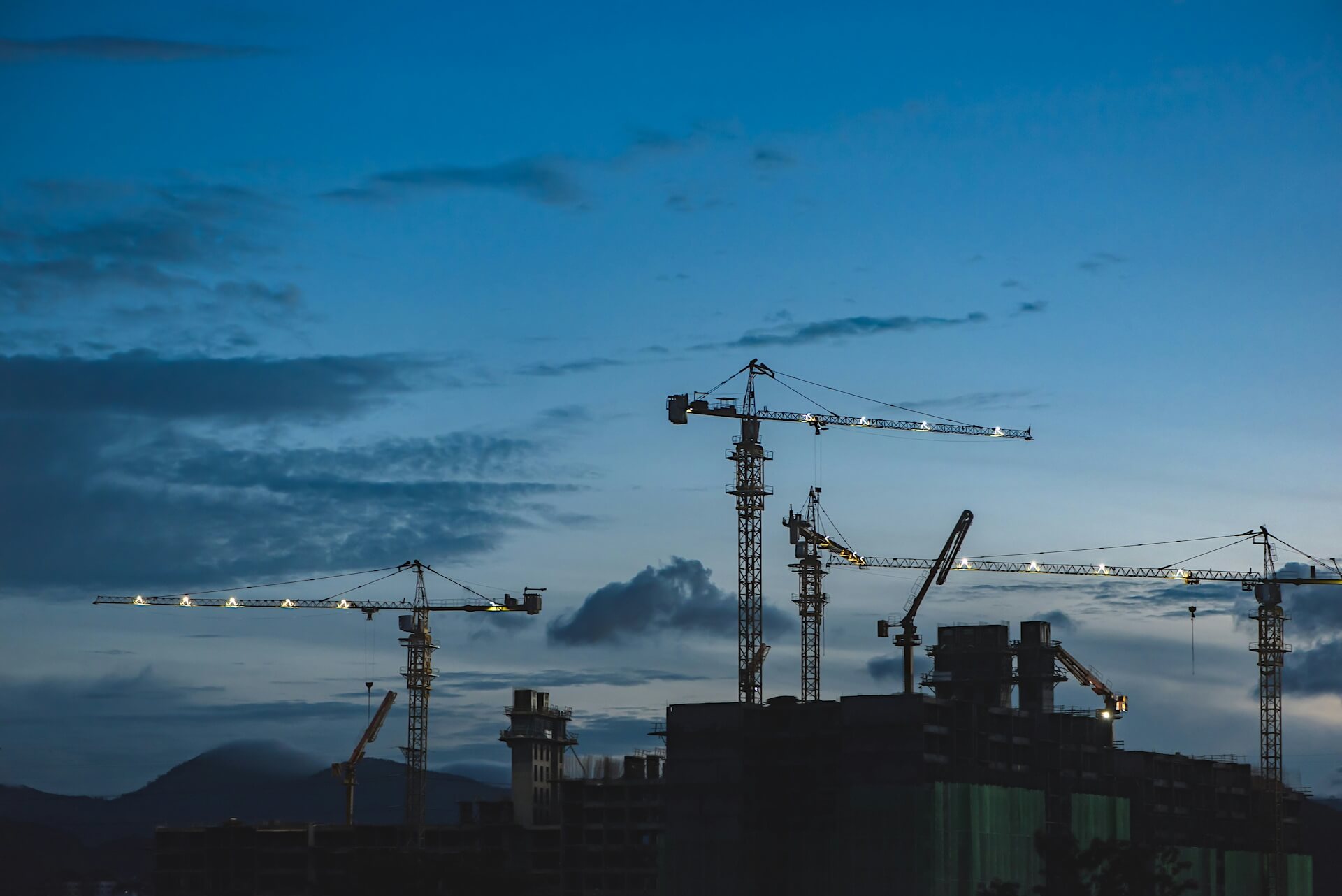
For the past eighteen months, the commercial real estate industry has been waiting for construction costs to stabilize. They have not. And the latest round of trade policy developments suggests they are more likely to climb than to correct.
The tariff landscape in 2026 remains volatile. Steel and aluminum face 50% tariffs. Kitchen cabinets, vanities, and a range of other building components carry levies of up to 25%. Even after the Supreme Court's February ruling that questioned the constitutionality of certain reciprocal tariffs, the policy environment remains unsettled — and developers are making decisions in real time without knowing what the final cost structure will look like.
The result is a construction environment where ground-up development pencils out for fewer projects than at any point in recent memory. And that reality is quietly reshaping how the smartest capital in commercial real estate is being deployed.
The New Math on Ground-Up Development
The economics of new construction have shifted dramatically. Material costs are one piece of it, but they are not the whole story.
Tariff-driven price increases on steel, aluminum, copper, and finished components have added an estimated 3% to 5% to total construction costs for commercial projects. That alone would be manageable for well-capitalized developers. But it is landing on top of a cost base that was already elevated before any tariffs took effect. Construction costs have risen roughly 34% since the end of 2020, according to the National Association of Home Builders. Labor costs continue to climb as tighter immigration policies reduce the available workforce in trades that disproportionately rely on foreign-born workers. Insurance premiums for new construction are escalating, particularly in coastal and weather-exposed markets. And entitlement timelines have lengthened in many jurisdictions, adding carrying costs that compound every other increase.
Layer these factors together and the picture becomes clear. A project that penciled comfortably three years ago now requires meaningfully higher rents, lower land basis, or both to achieve the same return profile. Many developers are responding rationally — by pausing, delaying, or shelving projects entirely until costs stabilize or rents catch up.
What Stalled Development Means for Existing Assets
Here is where the tariff story becomes a real estate investment story.
Every project that gets paused or canceled is supply that will not enter the market. In industrial, where Houston alone has 20.3 million square feet under construction but developers are becoming more selective about new starts, constrained future supply means existing functional assets become more valuable — not less.
The logic is straightforward. If it costs $150 per square foot to build a new industrial facility today, and you can acquire an existing facility with strong bones and functional infrastructure at $80 per square foot, you have a built-in margin of safety that no amount of pro forma rent growth can replicate in a new build. That gap between acquisition cost and replacement cost — which we explored in depth last month — is widening precisely because tariffs and labor constraints keep pushing replacement cost higher.
This is not a temporary dislocation. Even if tariff policy moderates, the structural cost pressures from labor scarcity, insurance, and entitlement complexity are not going away. The floor under construction costs has permanently risen, which means the value proposition of acquiring and repositioning existing assets has permanently improved.
The Repositioning Opportunity
Acquiring below replacement cost is only the first step. The real value creation happens in what comes next.
Existing assets purchased at a deep discount to replacement cost give buyers the financial flexibility to invest meaningfully in improvements — upgraded building systems, modernized infrastructure, expanded leasable area, enhanced tenant amenities — while still maintaining an all-in basis well below what a competing new build would cost.
This is particularly relevant in the segments where tariff-driven cost increases hit hardest. Industrial and manufacturing facilities require significant steel, concrete, and electrical infrastructure. A repositioned existing facility with heavy power already in place avoids the single largest cost and timeline risk in new development: the electrical interconnection queue. You cannot tariff-proof a new substation. But you can acquire an existing campus that already has one.
The same dynamic applies to adaptive re-use. Converting an underutilized office or retail structure into a higher-value use avoids the full ground-up cost exposure while leveraging the embedded value of an existing envelope — the concrete, the steel, the foundation, the utility connections. All of those components would be subject to tariff-inflated pricing in a new build. In an adaptive re-use play, they are already paid for.
A Widening Window
The current environment is creating a window that is widening, not closing. As construction costs continue to rise, the gap between what it costs to build new and what it costs to acquire existing widens further. Every tariff adjustment, every labor cost increase, every insurance premium hike makes the math on existing assets more favorable relative to new development.
For sellers, this dynamic carries an important implication. Assets with functional infrastructure, strong utility connections, and flexible building configurations are increasingly attractive to buyers who understand the replacement cost math. Sellers who can clearly demonstrate these infrastructure advantages — particularly secured power capacity, modern mechanical systems, or adaptable floor plans — are positioning their assets in the exact category that sophisticated buyers are targeting.
At PlaceMKR, this environment reinforces the strategy we have been executing for years. Our focus on acquiring functional, infrastructure-rich assets below replacement cost and repositioning them to meet current market demand is not a response to tariffs — it predates them. But the tariff environment has made the thesis more compelling, the math more favorable, and the competitive landscape less crowded as developers pull back from new starts.
The builders are waiting. We are buying.


PlaceMKR is a strategic investment firm specializing in investing and developing high-potential real estate opportunities across Texas. Our nimble, multi-faceted approach and deep market expertise allow us to create outsized returns through uncommon investments.
- Email:opportunity@placemkr.com
- Phone:(512) 593-1942
- Address:1643 E 2nd Street, Austin, TX 78702
