
Year-End Market Outlook: What We're Watching in Texas CRE for 2026


As 2025 draws to a close, Texas commercial real estate continues to demonstrate why it remains one of the nation's most compelling investment markets. The state has successfully navigated the rate normalization period while maintaining fundamental growth drivers. Understanding the key trends, risks, and opportunities heading into 2026 provides crucial context for strategic investment positioning.
The 2025 Foundation
Before looking ahead, it's worth acknowledging what 2025 delivered for Texas commercial real estate:
Sustained Population Growth: Texas added over 475,000 new residents in 2025, continuing its multi-decade trend as the nation's fastest-growing large state and creating sustained real estate demand.
Nearshoring Maturation: The nearshoring trend transitioned from announcement to operational reality, with major manufacturing facilities coming online and driving industrial demand.
Multifamily Absorption: Markets successfully absorbed the 2023-2024 supply wave, with occupancy stabilizing and rent growth resuming in most submarkets.
Office Clarity: The office sector bifurcation became clear, with flight-to-quality accelerating while conversion opportunities emerged for obsolete properties.
Infrastructure Advancement: Major transportation projects moved from planning to active construction, setting up value creation opportunities for 2026-2028.
This foundation positions Texas favorably entering 2026, with several key factors determining specific market performance across asset classes and geographies.
Key Trends We're Watching
1. The Nearshoring Evolution
What We're Seeing: Manufacturing facilities announced in 2023-2024 are now operational, with second-wave investments beginning as initial projects prove successful. Border markets are experiencing unprecedented industrial absorption.
2026 Outlook: Nearshoring enters its mature phase with:
- Expansion of existing facilities as companies increase commitments
- Supplier ecosystem development around major manufacturing hubs
- Infrastructure investments catching up to demand in key corridors
- Skilled labor competition driving wage growth and housing demand
Investment Implications: Focus shifts from land speculation to value-add opportunities in existing facilities, supplier parks, and workforce housing near manufacturing clusters.
2. Office Market Restructuring
What We're Seeing: The flight to quality has created clear winners and losers, with trophy assets commanding premium rents while older buildings face structural vacancy.
2026 Outlook: Market restructuring accelerates with:
- Premium office expansion: New trophy buildings in select submarkets meeting pent-up demand
- Conversion momentum: Successful office-to-residential conversions encouraging more projects
- Suburban resilience: Hub-and-spoke models favoring quality suburban offices
- Adaptive reuse creativity: Office buildings becoming medical, educational, and mixed-use properties
Investment Implications: Conversion opportunities for well-located Class B/C office with appropriate floor plates and infrastructure. Premium office in growth corridors remains defensive.
3. Multifamily Market Tightening
What We're Seeing: The supply wave of 2023-2024 has been absorbed, with occupancy recovering and rent growth returning to healthy levels in most Texas metros.
2026 Outlook: Market fundamentals strengthen with:
- Supply constraint: Minimal new deliveries from the 2024-2025 development pause
- Rent acceleration: 5-7% annual growth returning in supply-constrained submarkets
- Development restart: New construction beginning but won't deliver until 2027-2028
- Affordability pressure: Driving demand for workforce housing solutions
Investment Implications: Window for acquisitions closing as sellers recognize improving fundamentals. Development opportunities reemerging with better economics than 2024-2025 pause period.
4. Industrial Specialization
What We're Seeing: Industrial markets are segmenting by use type, with specialized facilities commanding premiums over generic warehouses.
2026 Outlook: Specialization continues with:
- Manufacturing facilities: Custom-built for specific industries with long-term leases
- Cold storage expansion: Food supply chain investments driving refrigerated warehouse demand
- Last-mile evolution: Smaller, urban-infill facilities for same-day delivery
- Battery/EV infrastructure: Specialized facilities for electric vehicle supply chain
Investment Implications: Generic warehouse development less attractive than specialized facilities with strategic tenants. Focus on build-to-suit and value-add repositioning.
5. Retail Transformation
What We're Seeing: Texas retail has completed its post-pandemic evolution, with clear categories of winners and losers established.
2026 Outlook: Stability with selective growth:
- Mixed-use integration: Retail as amenity in larger mixed-use developments
- Healthcare retail: Medical uses taking former retail space
- Entertainment expansion: Experience-based concepts continuing to grow
- Grocery evolution: Smaller-format, technology-enabled grocery concepts
Investment Implications: Redevelopment and repositioning opportunities in well-located but underperforming centers. New development limited to mixed-use projects.
6. Data Center Maturation
What We're Seeing: The AI-driven data center boom of 2024-2025 has created clear winner and loser markets based on power availability.
2026 Outlook: Market consolidation with:
- Power infrastructure investments: Utility upgrades enabling new markets
- Hyperscale dominance: Large tech companies controlling prime sites
- Edge computing growth: Smaller facilities in secondary markets
- Sustainability requirements: Renewable energy and water recycling becoming mandatory
Investment Implications: Secondary market opportunities as primary markets reach capacity. Focus on sites with renewable energy access and water availability.

Geographic Market Outlook
Austin
Strengths: Tech sector resilience post-2023 corrections, successful multifamily absorption, corporate campus expansion
Challenges: Office conversion complexity, infrastructure catching up to growth
2026 Prediction: Strong recovery momentum with multifamily leading, office selectivity continuing
Dallas-Fort Worth
Strengths: Nearshoring beneficiary, corporate expansion momentum, infrastructure investments paying off
Challenges: Suburban office oversupply, retail saturation in some corridors
2026 Prediction: Industrial and multifamily outperformance, selective office recovery in prime locations
Houston
Strengths: Energy sector strength with $80+ oil, port expansion benefits, manufacturing growth
Challenges: Office oversupply persists, insurance costs from climate events
2026 Prediction: Industrial leads all sectors, gradual office stabilization in energy corridor
San Antonio
Strengths: Military stability, semiconductor manufacturing growth, relative affordability
Challenges: Limited institutional capital access, wage growth lagging
2026 Prediction: Steady growth with manufacturing and military-related development leading
Border Markets (Laredo, McAllen, Brownsville, El Paso)
Strengths: Nearshoring operations now active, infrastructure improvements completing
Challenges: Labor shortage emerging, housing supply constraints
2026 Prediction: Continued industrial strength with acute need for workforce housing
Secondary Markets (College Station, Waco, Corpus Christi, Lubbock)
Strengths: Benefiting from major metro spillover, lower costs attracting businesses
Challenges: Limited development financing, smaller talent pools
2026 Prediction: Selective opportunities in university towns and energy markets
Macro Factor Implications
Several broader economic factors will influence 2026 Texas real estate performance:
Interest Rate Environment
Current Status: Rates have normalized from 2024 peaks but remain above 2010-2021 levels
2026 Expectation: Stable rate environment with Fed likely on hold
CRE Impact: Transaction velocity increases with rate clarity, cap rates stabilizing
Federal Policy
Current Status: Trade policies supporting nearshoring, immigration reforms affecting labor
2026 Expectation: Policy stability in election year
CRE Impact: Continued nearshoring momentum, labor availability challenges
Energy Markets
Current Status: Oil prices stable at $75-85, renewable energy scaling rapidly
2026 Expectation: Balanced energy portfolio supporting Texas economy
CRE Impact: Houston strength, Permian stability, renewable infrastructure demand
Technology Evolution
Current Status: AI adoption accelerating, automation reshaping industrial
2026 Expectation: Technology integration becoming standard across sectors
CRE Impact: Continued data center demand, smart building premiums, industrial automation
Risk Factors
Several potential challenges could impact 2026 performance:
Labor Shortage Risk: Skilled worker shortage constraining growth in construction and manufacturing sectors.
Insurance Crisis: Climate-related events driving insurance costs to unsustainable levels in coastal markets.
Political Uncertainty: 2026 midterm elections potentially disrupting policy stability.
Supply Chain Stress: Global tensions potentially disrupting nearshoring momentum.
Overbuilding Risk: Select submarkets seeing speculative development exceed absorption.
Investment Strategy for 2026
Given this outlook, our investment approach emphasizes:
Value Creation Focus
With appreciation moderating, operational excellence and active management become essential for returns.
Sector Rotation
Rotating from industrial land speculation to multifamily development as supply/demand dynamics shift.
Geographic Expansion
Secondary markets offering better risk-adjusted returns as primary markets fully priced.
Partnership Approach
Joint ventures and programmatic relationships becoming more important as capital requirements increase.
Technology Integration
Properties with smart building technology, sustainability features commanding premiums.
Defensive Positioning
Maintaining dry powder for potential distress emerging from overleveraged 2021-2022 acquisitions.
Our 2026 Focus Areas
At PlaceMKR, we're specifically targeting:
Multifamily Development: Ground-up development in supply-constrained submarkets with 2028 delivery targets.
Industrial Value-Add: Repositioning older industrial for modern manufacturing and logistics uses.
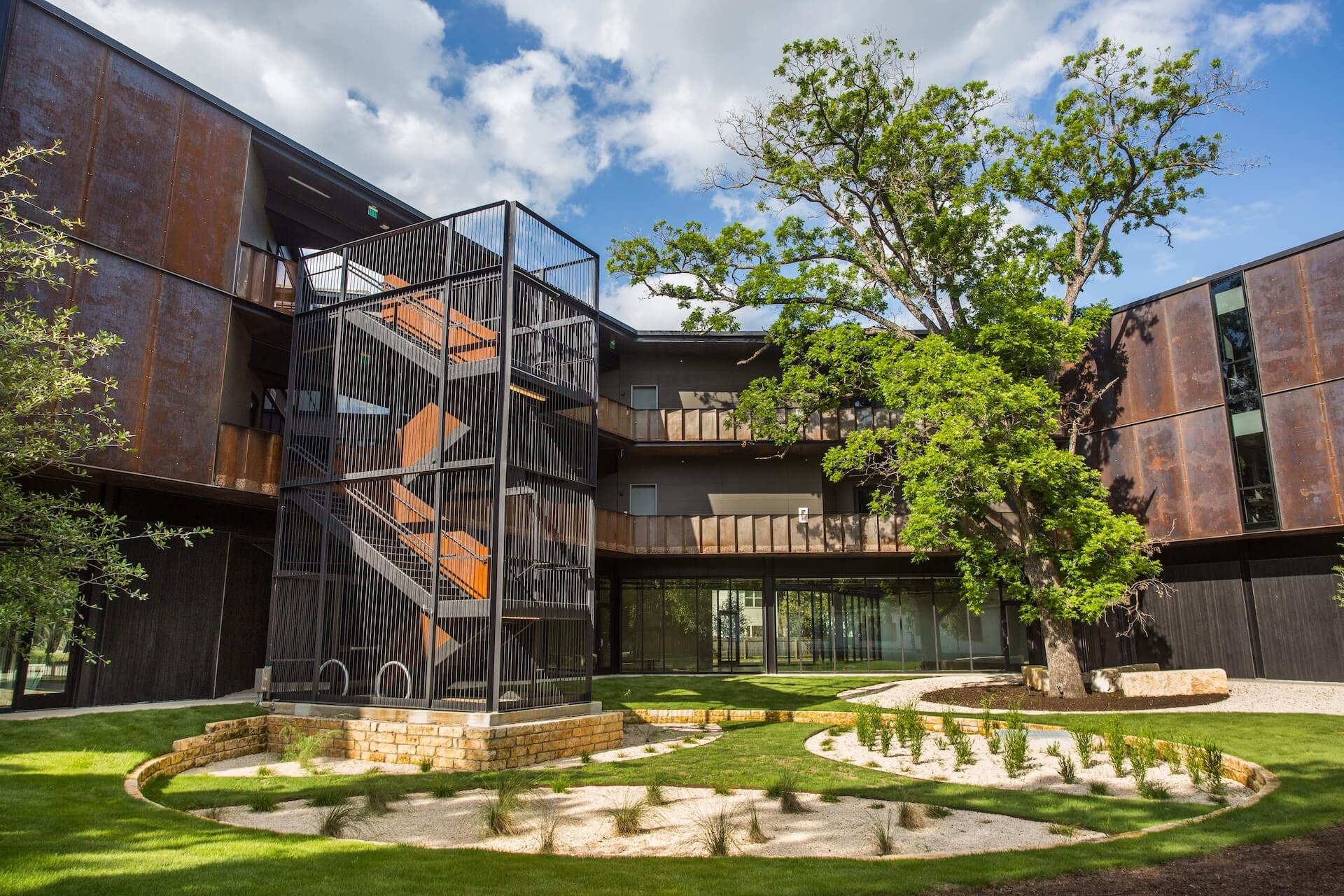
Office Conversions: Selective office-to-residential conversions in locations with proper zoning and infrastructure.
Mixed-Use Projects: Urban infill developments combining residential, retail, and office uses.
Workforce Housing: Affordable housing development near major employment centers and manufacturing hubs.
Secondary Market Expansion: Opportunistic investments in college towns and growing secondary cities.
Looking Beyond 2026
While 2026 presents specific opportunities, maintaining longer-term perspective remains critical:
Population Momentum: Texas approaching 35 million residents by 2030, driving sustained demand.
Economic Diversification: Technology, healthcare, and advanced manufacturing reducing energy dependence.
Infrastructure Benefits: Major projects completing in 2026-2028 creating value inflection points.
Climate Adaptation: Investments in resilient infrastructure and sustainable development.
Demographic Shifts: Millennial family formation and Gen Z workforce entry reshaping demand.
These structural advantages suggest Texas commercial real estate will continue offering compelling opportunities through market cycles.
Conclusion
As we enter 2026, Texas commercial real estate has successfully navigated the transition from pandemic-era distortions to normalized market conditions. The state's fundamental advantages—population growth, business-friendly environment, economic diversification, and infrastructure investment—remain intact and compelling.
Success in 2026 requires evolution from the strategies that worked in 2023-2025. The easy gains from rate normalization and distressed acquisitions are largely behind us. Going forward, returns will come from operational excellence, strategic positioning, and patient capital deployment in emerging opportunities.
At PlaceMKR, we're positioned for this next phase with deep market knowledge, established relationships, and flexible capital strategies. The Texas growth story continues, but the chapters are changing—and we're ready to help our investors capitalize on what comes next.


PlaceMKR is a strategic investment firm specializing in investing and developing high-potential real estate opportunities across Texas. Our nimble, multi-faceted approach and deep market expertise allow us to create outsized returns through uncommon investments.
- Email:opportunity@placemkr.com
- Phone:(512) 593-1942
- Address:1643 E 2nd Street, Austin, TX 78702
