
Data Centers, AI, and the Tenants Driving the Powered Land Premium

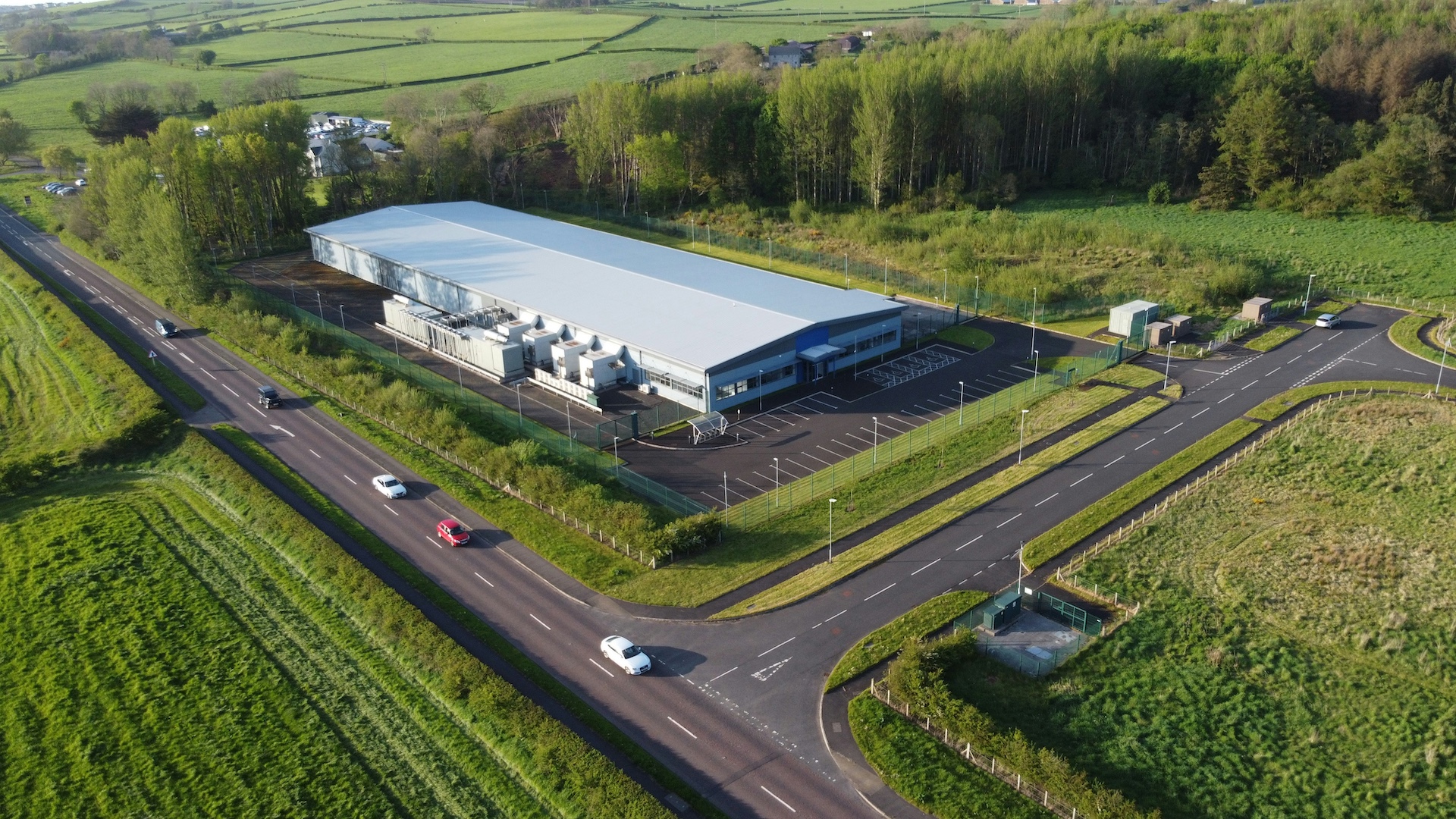
Earlier this year, we explored why the national power grid has become the defining constraint in commercial real estate -- how interconnection queues stretching three to seven years have made secured utility capacity more valuable than geographic location. That was the supply side of the story.
This is the demand side. And the demand is staggering.
The Scale of What Is Being Built
The artificial intelligence industry is on a capital expenditure trajectory that has no precedent in commercial real estate history.
Microsoft, Amazon, Google, and Meta have collectively committed over $300 billion in data center investment through 2026 and 2027. These are not speculative projections. They are committed capital budgets, much of it already under contract with construction firms and utility providers. The hyperscale data center market is expected to grow at roughly 25% annually through the end of the decade, driven primarily by the compute demands of training and running large language models and AI applications.
To put the power demand in context: a traditional office building might consume 15 to 25 watts per square foot. A conventional data center operates at 100 to 150 watts per square foot. The newest AI training facilities are pushing 300 watts per square foot and beyond, with individual GPU clusters requiring dedicated power feeds that would have been considered industrial-scale a decade ago.
A single hyperscale AI data center campus can consume 100 to 300 megawatts of power -- the equivalent of a small city. And the pipeline of planned facilities suggests that total data center power demand in the United States could double or triple over the next five years.
Beyond Data Centers: Advanced Manufacturing
The power demand story extends well beyond the technology sector.
The political and economic push to reshore advanced manufacturing -- semiconductors, EV batteries, pharmaceutical production, defense components -- is generating a parallel wave of demand for high-power industrial facilities. These are not traditional warehouse operations. They are sophisticated manufacturing environments that require substantial electrical infrastructure, specialized HVAC systems, heavy crane capabilities, and reinforced structural specifications.
The CHIPS Act, the Inflation Reduction Act, and a sustained bipartisan focus on supply chain security have collectively catalyzed billions of dollars in domestic manufacturing investment. Many of these projects are targeting sites based primarily on one criterion: available power.
An EV battery gigafactory requires 50 to 150 megawatts of power. A semiconductor fab can consume 100 megawatts or more. Even smaller-scale advanced manufacturing operations -- precision machining, aerospace components, medical device production -- increasingly require power profiles that exceed what standard industrial sites can deliver.

What These Tenants Actually Need
Understanding the demand side means understanding what these tenants are looking for in a site. It is not just megawatts on a utility bill. It is a specific set of infrastructure requirements that most existing commercial real estate inventory cannot satisfy.
Secured power capacity is the threshold requirement. A site without confirmed, contractual access to sufficient utility power is immediately disqualified, regardless of every other attribute it might offer. Tenants in this category cannot wait three to five years for a utility provider to build out infrastructure. They need power that is available now or within a very near-term timeline.
Redundancy and reliability matter almost as much as raw capacity. Data center operators require multiple independent power feeds, on-site backup generation, and utility-level service agreements that guarantee uptime. Advanced manufacturing tenants need power quality specifications -- stable voltage, clean frequency, protection from surges and interruptions -- that go well beyond what a typical industrial user requires.
Physical infrastructure is the second filter. Data centers need reinforced floor loads to support high-density server racks, advanced cooling systems to manage enormous heat output, and security infrastructure that meets stringent compliance requirements. Manufacturing tenants need clear heights, crane systems, heavy floor loads, and building configurations that support specialized production workflows.
Connectivity completes the picture. Data centers require fiber-optic network access with multiple redundant paths. Manufacturing facilities need proximity to transportation corridors for supply chain logistics. Both need access to a labor market deep enough to support specialized operational staffing.
Why This Matters for CRE Investors
The convergence of these demand drivers is fundamentally reshaping how commercial real estate is valued.
A site that can satisfy the power, infrastructure, and connectivity requirements of a hyperscale data center or advanced manufacturing tenant commands pricing that bears no resemblance to traditional industrial comps. The 40 MW substation at an infill industrial campus is not just a utility feature -- it is the asset's primary source of value.
Investors who understand this dynamic are evaluating properties through an entirely different lens. The traditional questions -- What is the rent per square foot? What are the comparable sales? What is the vacancy rate in the submarket? -- are secondary to the infrastructure question: Can this site deliver the power that the highest-value tenants in the market require?
The answer to that question increasingly determines whether an asset is worth $30 per square foot or $300 per square foot. The spread between powered and unpowered is not a premium. It is a category distinction.
At PlaceMKR, our acquisition strategy is built around identifying and securing assets that can satisfy this demand profile before the broader market fully prices it in. The tenants driving the powered land premium are not theoretical. They are actively seeking space, signing leases, and deploying billions in capital expenditure. The investors who control the sites they need will define the next era of commercial real estate value creation.




PlaceMKR is a strategic investment firm specializing in investing and developing high-potential real estate opportunities across Texas. Our nimble, multi-faceted approach and deep market expertise allow us to create outsized returns through uncommon investments.
- Email:opportunity@placemkr.com
- Phone:(512) 593-1942
- Address:1643 E 2nd Street, Austin, TX 78702
