
Everyone's Chasing the Wrong Building

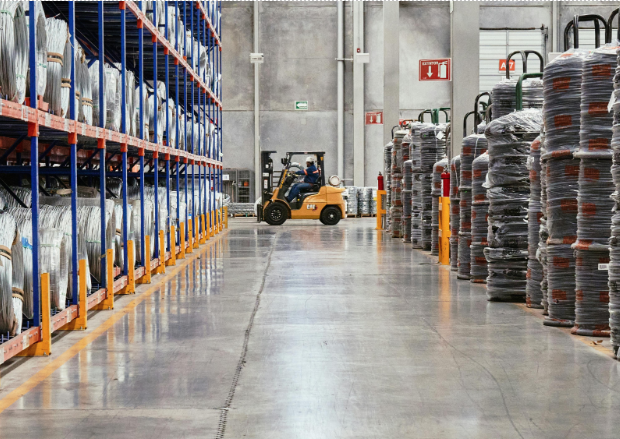
When a major manufacturer announces a new Texas plant, the same thing happens every time. The trade press runs the headline. Within a week, every buyer with capital is circling the trophy box, ready to bid it up. We watch that scramble and go looking in the opposite direction. The building with the famous name on the lease is almost always the least interesting real estate in the deal. The money is in the second ring: the smaller, plainer buildings the plant pulls in around it.
The Second Ring Is Where the Money Is
The wave feeding those buildings is real, and it isn't slowing. The Texas A&M Real Estate Research Center estimates roughly a quarter of all industrial space absorption in the state is now tied to manufacturing. That's a structural shift in where industrial demand is coming from. The last cycle was built on e-commerce distribution, big boxes moving parcels. This one is increasingly built on things being made, and manufacturing demand behaves nothing like distribution demand.
Houston is the clearest example of the shift, and it's a strange one if you know the city's history. A metro long defined by energy and petrochemicals is now landing advanced manufacturing that has nothing to do with either. Per trade coverage of the sector, Apple has announced an AI server manufacturing facility in the Houston area, Nvidia is standing up AI supercomputer production in both the Houston and Dallas regions, and a $365 million cable manufacturing facility near Houston was slated to come online in 2026. Big, capital-intensive, headline-grabbing projects, exactly the kind that set off the scramble for the trophy box.
A Structural Shift, Not a One-Off
Here's the part the scramble misses. A manufacturer doesn't operate alone. Supplier clusters form around assembly and production plants because shorter distances lower costs and tighten timelines. The machinists, the fabricators, the packagers, the material-handling and logistics firms that feed the line all need space too, and they need it close. That space is smaller, more numerous, and considerably less glamorous than the anchor plant. It's precisely the space big capital overlooks, because the tickets are too small to move an institutional needle and the leasing is too hands-on to run from three time zones away.
Stickier Than Distribution
There's a second reason the ring matters, and it's about durability. Manufacturing tenants are stickier than distribution tenants. A distribution user can be re-optimized out of a building in a single lease cycle. The network changes, the box empties. A manufacturer that has tooled up a plant and pulled its suppliers around it has committed to a submarket for a decade or more. That stickiness flows outward. When the anchor commits, the ecosystem commits with it, and the buildings that house the ecosystem inherit the same long horizon. You're not underwriting a tenant. You're underwriting a cluster.
The Mispricing We Like
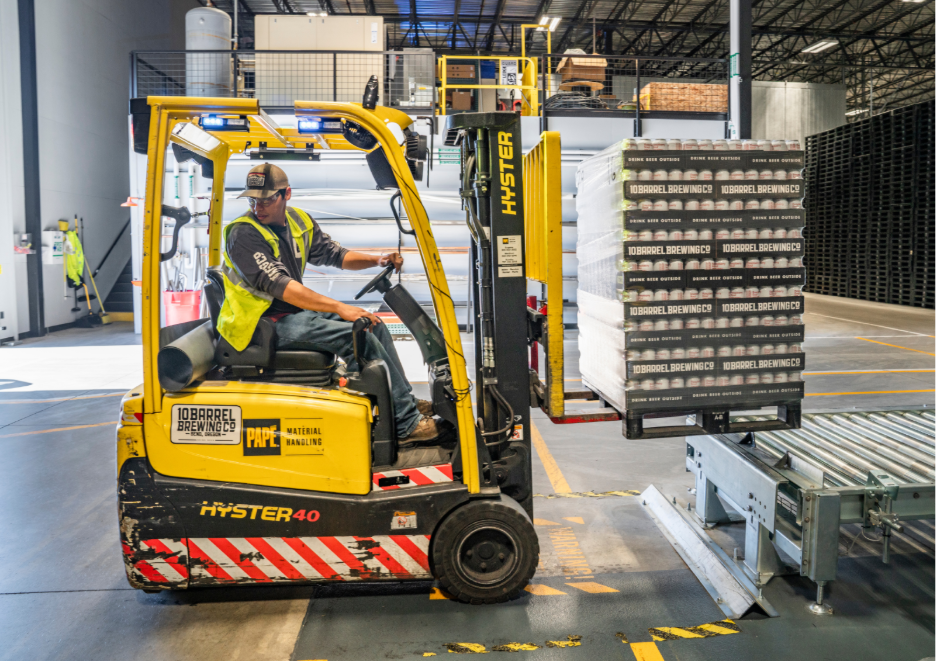
So look at where that leaves the mispricing. The trophy box gets bid down to a skinny return by funds with a lower cost of capital and more patience than we have. That's their game, and we're happy to let them have it. The supplier buildings get none of that attention. Too small to matter to an institution, too operationally involved for a passive manager, and invisible to the trade press that only writes up the anchor. Which is exactly why they're where an operator who knows the local corridor can still buy demand before it's obvious to everyone.
Not Theory: Rankin Road
This isn't theory for us. When we acquired the advanced manufacturing campus on Rankin Road in North Houston, we weren't buying a headline. We were buying into this dynamic directly: functional manufacturing infrastructure in a corridor the reshoring wave is actively feeding. That's the kind of asset we want: it does real work, it sits where the demand is heading, and it wasn't the building everyone else was fighting over.
The differentiator here isn't scale. We're never going to out-institution the institutions on a marquee plant, and we don't try. The differentiator is knowing the local map well enough to see the demand the headline creates two and three steps down the chain, and being fast enough to own it before that demand shows up in a comp. That's a ground-game advantage, not a balance-sheet one, and the ground game is where we'd rather compete.
Watch Where Everyone Runs
None of this means the anchor announcements don't matter. They matter enormously. They're the signal. When a plant of real size commits to a submarket, it's telling you where a whole ecosystem of demand is about to land. We read those announcements closely. We just read them as a map to the second ring rather than an invitation to bid on the first.
So the next time a big plant announcement drops and the market starts running toward it, watch where everyone goes. Then look hard at what they ran past. The fabricator that has to be twenty minutes from the line. The packager that scales up when the plant does. The flex tenant whose lease term quietly tracks the manufacturer's ramp. Most of those buildings will never carry a name anyone recognizes. All of them still have to house something real, for a long time. That's the reshoring real estate we want: the boring, sticky, overlooked kind that the famous building can't function without.
More Articles



PlaceMKR is a strategic investment firm specializing in investing and developing high-potential real estate opportunities across Texas. Our nimble, multi-faceted approach and deep market expertise allow us to create outsized returns through uncommon investments.
- Email:opportunity@placemkr.com
- Phone:(512) 593-1942
- Address:1643 E 2nd Street, Austin, TX 78702
