
The Texas Playbook: What We Learned Building a Portfolio in the Most Competitive Market in the Country

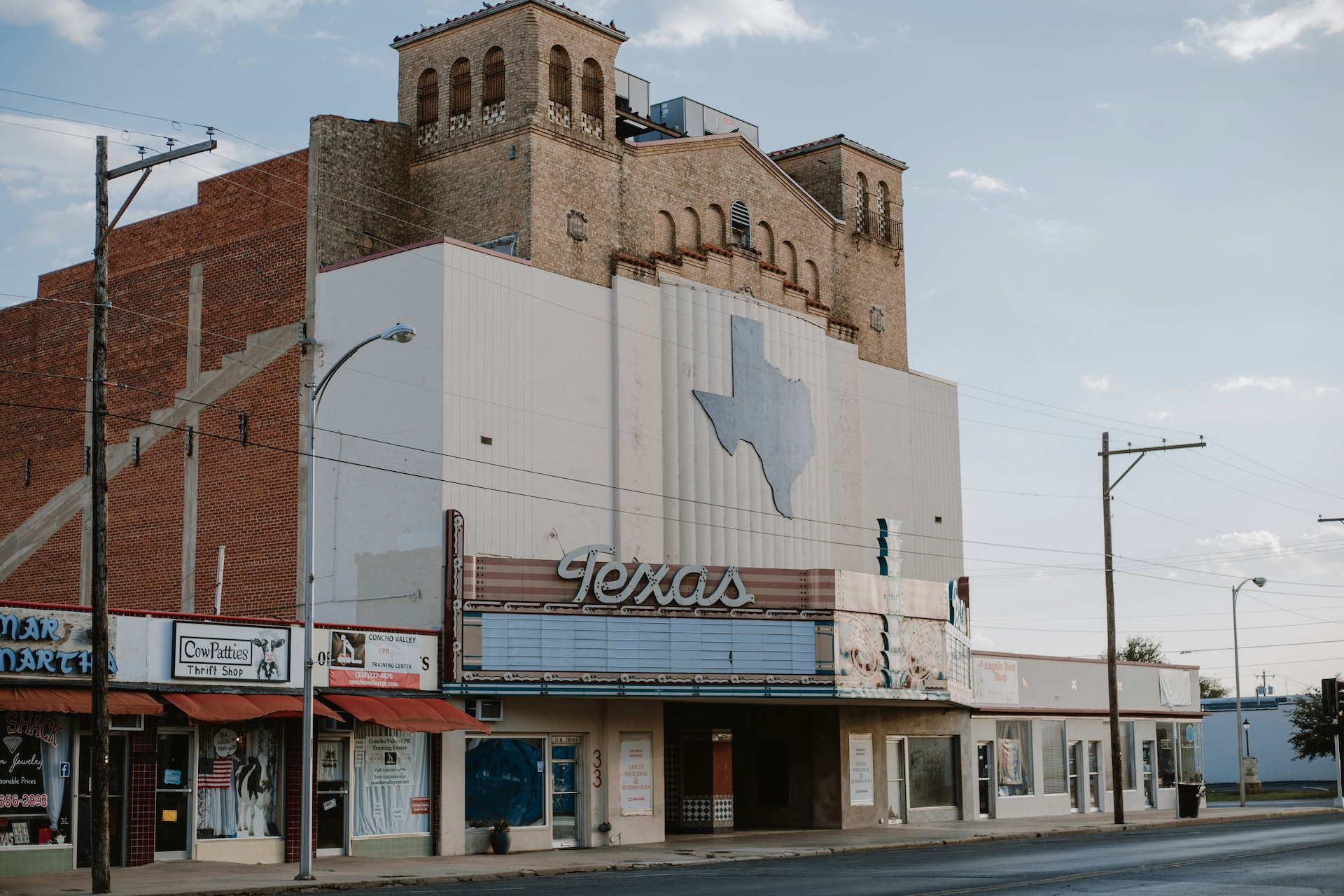
Texas has been the most active commercial real estate market in the United States for the better part of a decade. More capital has flowed into Texas than any other state. More transactions have closed. More institutional investors have opened offices in Dallas, Houston, Austin, and San Antonio than in any comparable period in the state's history.
Building a portfolio in that environment -- as a small, nimble firm competing against the largest institutional players in the world -- required developing a set of operating principles that are easy to articulate and extraordinarily difficult to execute. Those principles are now the foundation of how we deploy capital nationally. Here is what Texas taught us.
Lesson 1: The Submarket Is the Market
Texas is not a single market. It is dozens of distinct submarkets, each with its own supply-demand dynamics, tenant composition, infrastructure profile, and competitive landscape. The North Houston industrial corridor near IAH is a fundamentally different market than the Southeast corridor near the Port. The Austin suburbs along the I-35 corridor behave differently than the infill urban core. The Dallas-Fort Worth industrial landscape varies dramatically from Alliance in the north to the Southern Dallas Logistics Hub.
Institutional investors often evaluate Texas at the metro level -- they allocate to "Dallas" or "Houston" based on population growth, job creation, and top-line absorption numbers. That approach captures the broad trend but misses the submarket-level dynamics where value is actually created or destroyed.
We learned early that the investors who win in Texas are the ones who understand the specific submarket they are buying into -- its vacancy trends, its tenant composition, its construction pipeline, its infrastructure constraints -- at a level of granularity that metro-wide data cannot provide. That discipline has been the single most transferable lesson as we evaluate opportunities in new markets nationally.
Lesson 2: Relationships Outperform Marketing
In a market as competitive as Texas, the best deals rarely hit the open market. They trade through relationship networks -- broker-to-buyer connections built over years of consistent execution, transparent communication, and reliable follow-through.
We built our Texas deal sourcing engine one transaction at a time. Every deal we closed on schedule, every LOI we honored without retrading, every due diligence process we completed without surprises became a data point in the broker community. Over time, those data points compounded into a sourcing advantage that no amount of marketing spend could replicate.
The lesson is not that relationships are important -- everyone knows that. The lesson is that relationships are built on performance, not proximity. You do not earn the first call by taking brokers to dinner. You earn it by closing deals cleanly and being easy to work with. That distinction is critical, and it applies in every market we enter.

Lesson 3: Infrastructure Advantages Compound
Texas taught us that the most durable competitive advantages in commercial real estate are physical, not financial. A superior capital structure can be replicated by a competitor with deeper pockets. A superior market thesis can be copied by anyone with a Bloomberg terminal. But a 40 MW substation on an infill industrial campus cannot be replicated -- because the infrastructure does not exist, the utility capacity is not available, and the timeline to create it stretches years into the future.
Our "Powered Land" thesis did not emerge from an academic exercise. It emerged from years of operating in Texas markets where we watched properties with strong infrastructure advantages consistently outperform properties with better locations but weaker infrastructure. The asset with secured power, the campus with crane-served manufacturing capability, the site with redundant utility feeds -- these consistently commanded premiums that grew over time as the cost and difficulty of replicating that infrastructure increased.
Lesson 4: Flexibility Is a Strategy, Not a Weakness
Texas is a volatile market. Energy cycles, population booms, construction surges, and policy shifts create an environment where the assumptions underlying a five-year hold can change dramatically in year two. The investors who build rigid strategies and refuse to adjust get punished. The investors who maintain strategic flexibility -- who can pivot between asset classes, hold periods, and exit strategies based on real-time conditions -- are the ones who survive and compound.
Our asset-agnostic investment philosophy was forged in this volatility. We learned that committing rigidly to a single asset class or strategy is a liability when the market is moving as fast as Texas moves. The ability to shift capital between powered industrial, adaptive re-use, net lease, and senior housing entitlements based on where the best risk-adjusted returns exist at any given moment is not indecisiveness. It is discipline.
Lesson 5: Speed Kills the Competition
In Texas, the best deals are won and lost in days, not weeks. The institutional investors who require two months of committee review to approve a Letter of Intent are consistently outbid by smaller, more decisive operators who can move from initial evaluation to signed LOI in 72 hours.
We built our decision-making structure around speed. The principals who evaluate deals are the same people who approve them. There is no committee. There is no board. There is no multi-week approval process between identifying an opportunity and committing to pursue it. That speed is a function of our size, our structure, and our conviction -- and it is the single most difficult advantage for larger competitors to replicate.
Taking the Playbook National
Every lesson we learned in Texas applies directly to how we evaluate and execute deals in new markets. The submarket-level analysis. The relationship-driven sourcing. The infrastructure-first underwriting. The strategic flexibility. The speed.
What changes when we leave Texas is not the playbook -- it is the learning curve. Each new market requires developing the same submarket-level understanding, the same broker relationships, and the same infrastructure awareness that took years to build in our home market. We are not trying to shortcut that process. We are committed to replicating it with the same rigor and patience, knowing that the principles are sound because Texas tested them relentlessly.
The most competitive CRE market in the country taught us how to compete. Now we are taking those lessons everywhere the opportunities lead.



PlaceMKR is a strategic investment firm specializing in investing and developing high-potential real estate opportunities across Texas. Our nimble, multi-faceted approach and deep market expertise allow us to create outsized returns through uncommon investments.
- Email:opportunity@placemkr.com
- Phone:(512) 593-1942
- Address:1643 E 2nd Street, Austin, TX 78702
