
Mid-Year Market Check: What We Got Right, What Surprised Us, and Where We Are Headed


At the start of 2026, we published our market outlook. We made specific calls about where we saw the commercial real estate market heading and where we planned to deploy capital. Six months in, it is worth revisiting those predictions -- not to take a victory lap, but to honestly assess what has played out as expected, what has surprised us, and what has shifted our thinking.
Most firms publish annual predictions and never mention them again. We think that is a missed opportunity. Markets are not static, and neither should analysis be. Here is our honest halftime report.
What We Got Right
Powered Land as the primary value driver. This was our highest-conviction call entering the year, and six months in, it has been validated more emphatically than we expected. The grid bottleneck has not eased. Interconnection queues have not shortened. And the demand from data center operators and advanced manufacturing tenants for sites with secured power capacity has only accelerated. Every indicator suggests that the premium for powered land is widening, not compressing.
Below-replacement-cost acquisition as the dominant strategy. Construction costs have continued to climb. Tariff uncertainty has not resolved. Labor constraints have not eased. The gap between what it costs to build new and what it costs to acquire existing has widened further in the first half of 2026, making our acquisition-and-repositioning approach more compelling by the month.
The maturity wall as a deal-flow catalyst. We expected distressed and motivated sellers to create acquisition opportunities as debt matured. That dynamic is playing out, though more slowly and more quietly than the headline numbers might suggest. The opportunities are real, but they require patience, sourcing relationships, and the ability to evaluate capital structure distress versus fundamental distress -- which we have been doing actively this year.
What Surprised Us

The speed of the advanced manufacturing buildout. We anticipated demand from reshoring and manufacturing investment, but the pace and scale of announced projects has exceeded our expectations. The combination of CHIPS Act funding, IRA incentives, and sustained political focus on supply chain security has created a pipeline of manufacturing facility demand that is absorbing powered industrial sites faster than we projected.
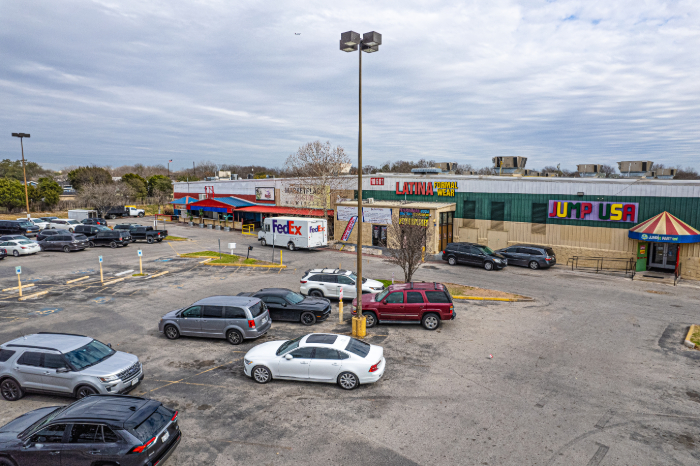
The resilience of retail fundamentals. We are not a retail-focused investor, but the strength of grocery-anchored and neighborhood retail has been notable. Limited new supply, steady consumer spending, and the strongest retail valuations in a decade suggest that the "retail is dead" narrative -- which we admittedly did not push back on as strongly as we could have -- deserves more nuance than the industry has given it.
The persistence of the bid-ask gap. We expected seller expectations to adjust more quickly as the maturity wall created urgency. In practice, many sellers have been slower to reprice than the macro environment would suggest. Extend-and-pretend strategies have given some owners more runway than we anticipated, and the bid-ask gap -- while narrowing -- remains wider than we expected at this point in the cycle.
What Has Shifted Our Thinking
Geographic expansion is both easier and harder than expected. Easier because the deal flow from out-of-state markets has been stronger than we anticipated -- brokers and sellers are finding us based on our content and track record. Harder because evaluating submarkets in unfamiliar markets at the granular level we require takes more time and relationship development than simply underwriting the deal itself. We remain committed to nationwide deployment, but we are being deliberate about where and how we enter new markets.
The partnership model is more important than we initially emphasized. Our recent experience structuring institutional co-investment for larger acquisitions has reinforced that the right capital partnership does not dilute returns -- it enables access to opportunities we would not pursue independently. We expect partnerships to play a larger role in our deployment strategy in the second half of the year.
Where We Are Headed
The second half of 2026 is shaping up to be the most active acquisition environment we have operated in. The maturity wall is peaking. Construction costs continue to create favorable acquisition math. And the demand for powered, infrastructure-rich assets shows no sign of moderating.
Our focus for the remainder of the year is straightforward: continue executing the playbook that the first half validated. Acquire below replacement cost. Target infrastructure advantages that are impossible to replicate. Move with certainty and speed. And be honest about what we are seeing -- including when the market surprises us.

.jpeg)

PlaceMKR is a strategic investment firm specializing in investing and developing high-potential real estate opportunities across Texas. Our nimble, multi-faceted approach and deep market expertise allow us to create outsized returns through uncommon investments.
- Email:opportunity@placemkr.com
- Phone:(512) 593-1942
- Address:1643 E 2nd Street, Austin, TX 78702
